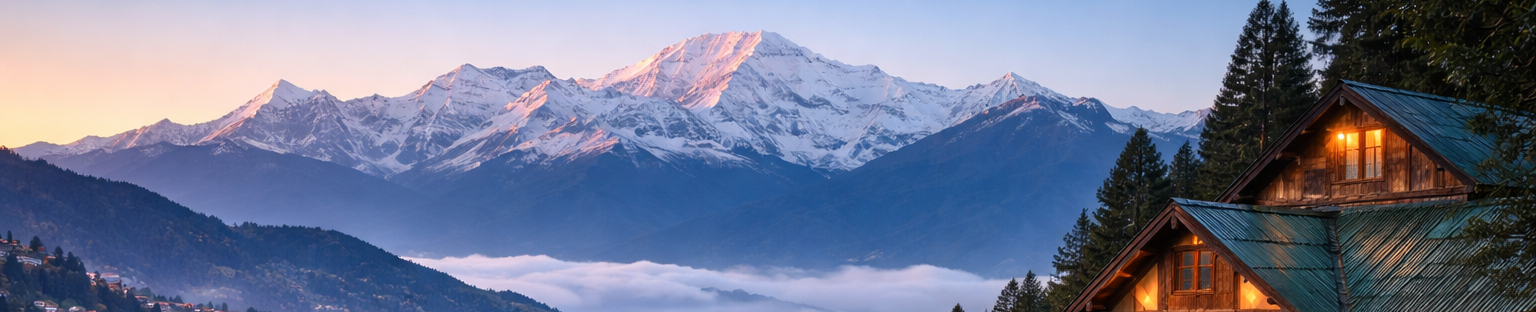
Sandakphu isn’t the kind of trip you take for luxury—and honestly, that’s what makes it special. You’re going to get bumped around on rough mountain tracks, sleep in tiny family-run homestays, and freeze a little at night. But when you step outside before sunrise into the freezing air and watch the summit of Kanchenjunga catch the first gold rays of daylight, the bone-rattling ride completely fades from memory.
Sitting right on the edge of West Bengal at 3,636 metres (11,930 ft), Sandakphu is the highest peak in the state. If the weather plays nice, you don't just get a view of Kanchenjunga; you get the whole Himalayan skyline, including Mount Everest off in the distance. You can tackle the route either by hiring a classic vintage Land Rover or hiking up through the Singalila forest reserve—both are fantastic experiences in their own right.
The Lay of the Land
Sandakphu sits along the Singalila Ridge right on the border between India and Nepal. Because it sits within Singalila National Park, the landscape feels genuinely wild. Depending on when you go, your trail will be framed by blooming rhododendrons, thick magnolias, or misty alpine scrub.
The highlight for most is seeing the "Sleeping Buddha"—a natural silhouette created by the Kanchenjunga range that looks like a giant lying across the sky.
Distance & Getting There
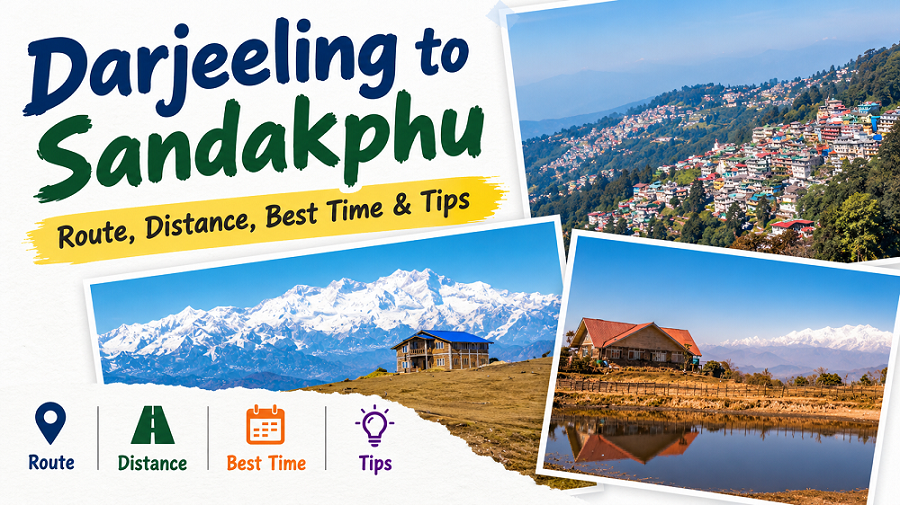
On paper, Darjeeling to Sandakphu is only about 75 to 85 km. Don't let that fool you, though. These aren't highway kilometers—they're narrow, winding, and heavily rutted tracks. A 4x4 or vintage Land Rover usually takes anywhere from 5 to 7 hours, longer if you stop every twenty minutes to take photos (which you probably will).
Most journeys start from Manebhanjan, the small border town where both the Land Rover association and the trekking trails originate. From there, the route winds through Chitrey, Meghma, Tumling, Gairibas, and Kalipokhri.
- By Land Rover / 4x4: If you aren't up for a multi-day trek, this is your best bet. It’s a rough ride, but stopping for tea at Tumling or taking photos by the black pond at Kalipokhri makes it a classic road trip. Make sure you book through licensed operators in Manebhanjan.
- On Foot: If you choose to trek, plan for 2 to 3 days on the way up, staying overnight at high-altitude hamlets along the ridge. Walking lets you adjust to the altitude gradually and gives you a front-row seat to border village life. If it’s your first high-altitude trek, hiring a local guide is a smart move.
Choosing Your Season
- Spring (March to May): Great for flower lovers. The forests burst into bright red and pink rhododendrons, and the weather is crisp and comfortable.
- Autumn (October to November): The undisputed best time for crystal-clear mountain views. Post-monsoon skies mean you have the highest chance of spotting Everest and Kanchenjunga clearly. Naturally, it’s also the busiest time, so book homestays well in advance.
- Winter (December to February): Expect freezing temperatures and a good chance of snow. It’s breathtaking, but icy roads can bring transport to a halt. Bring serious thermal layers.
- Monsoon (June to September): Best avoided unless you love heavy rain, leeches, and thick fog. Landslides frequently close the track.
Essential Stops Along the Way
- Manebhanjan: The base hub filled with tea stalls, trekking offices, and old 1950s Land Rovers waiting to head up.
- Chitrey: A quiet little hamlet home to a small monastery—a great spot for your first tea break.
- Tumling: A tiny settlement right on the Nepal border with stunning open valley views. Highly recommended for an overnight stop.
- Kalipokhri: Named after a sacred dark lake that never freezes. It’s usually the last major stop before the final climb to Sandakphu.
- Sandakphu Summit: The main event. Try to stay overnight at the top so you can catch the famous golden sunrise over the Himalayas.
What to Know Before You Go
- Stays are basic: Expect simple wood-plank lodges and local homestays. Electricity, hot water, and mobile network are unreliable at best.
- Costs: A full return Land Rover trip from Manebhanjan generally runs around ₹5,500 to ₹7,500 depending on your itinerary (getting to Manebhanjan from Darjeeling is separate). Don't forget to budget for national park entry fees, guide charges, and homestay meals.
- Bring cash: ATMs don't exist up here, and UPI/card machines rarely catch a signal.
- Layer up: Even if Darjeeling feels mild, temperatures drop dramatically once you get past Tumling.
Is It Worth It?
Absolutely. Sandakphu offers a raw, unfiltered Himalayan experience that you just can't get from a standard hotel balcony in Darjeeling. Whether you bump your way up in a 4x4 or earn the view step-by-step on foot, it’s an unforgettable journey.
Option 2: Direct, Punchy & Modern (Best for a Travel Website / Guide)
headline: The Practical Guide to Planning a Sandakphu Trip from Darjeeling
Sandakphu trades comfort for views—and it’s a trade worth making. Reaching West Bengal’s highest point at 3,636 metres means enduring bone-jarring roads or multi-day hikes. But the payoff is one of the grandest panoramas in Asia: the sunrise over Kanchenjunga and, on clear days, a silhouette of Everest.
Route Overview & Transport Options
Located inside Singalila National Park along the India-Nepal border, Sandakphu is roughly 80 km from Darjeeling. Given the terrain, that drive takes between 5 and 7 hours.
- Vehicle Route: Most travelers head from Darjeeling to Manebhanjan, the transit hub where you register and hire a registered 4x4 (classic Land Rovers or modern Mahindras). From Manebhanjan, you'll climb through Chitrey, Tumling, and Kalipokhri.
- Trekking Route: The classic trek follows a similar trajectory over 2 to 3 days. It’s accessible for beginners with decent fitness, though hiring a local guide is strongly recommended for safety and navigation.
Best Time to Visit
- Oct – Nov: Crystal clear skies and peak visibility for mountain views.
- Mar – May: Moderate weather and vibrant rhododendron blooms along the trails.
- Dec – Feb: Snowfall and extreme cold; travel can be disrupted by icy roads.
- Jun – Sep: Heavy monsoon rains make roads treacherous and block views.
Accommodation & Logistics
- Lodging: Facilities are strictly basic homestays and mountain huts. Expect intermittent power, shared bathrooms, and basic solar hot water.
- Budgeting: Expect around ₹5,500–₹7,500 for a private vehicle hire out of Manebhanjan. Carry sufficient physical cash for room, board, and park entry permits, as digital payments are non-functional at high altitude.