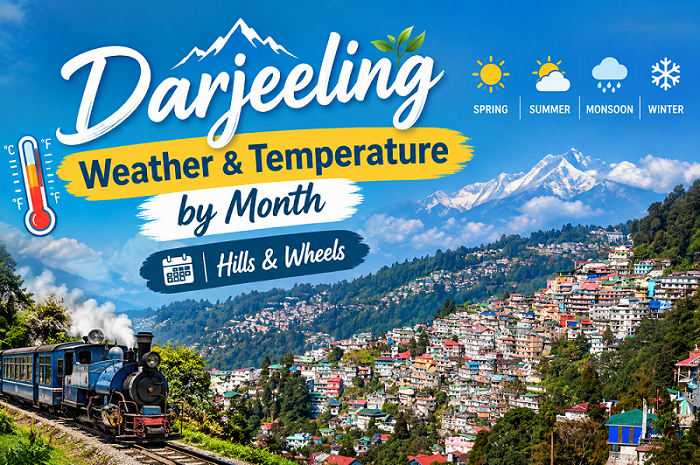
Darjeeling is one of the most popular hill stations in West Bengal, famous for its cool mountain climate, tea gardens, Himalayan views and scenic landscapes. The weather in Darjeeling remains considerably cooler than the plains throughout much of the year, although temperature, rainfall and visibility change significantly from season to season.
Located at an elevation of approximately 2,128 meters above sea level, Darjeeling experiences a temperate mountain climate. Summers are mild, the monsoon is wet and misty, autumn is generally clearer, and winters can be quite cold, particularly during the early morning and night.
Based on climate data for 1991–2020, Darjeeling's average daytime temperature is around 17.3°C, while the average nighttime temperature is around 8.8°C.
Month | Month Average | Average Low | Approx. Average |
January | 11.1°C | 1.7°C | 6.4°C |
February | 12.4°C | 3.1°C | 7.8°C |
March | 15.9°C | 6.0°C | 11.0°C |
April | 18.6°C | 9.0°C | 13.8°C |
May | 19.3°C | 10.8°C | 15.1°C |
June | 19.8°C | 12.8°C | 16.3°C |
July | 19.5°C | 13.4°C | 16.5°C |
August | 19.9°C | 13.5°C | 16.7°C |
September | 19.5°C | 12.7°C | 16.1°C |
October | 19.4°C | 9.9°C | 14.7°C |
November | 17.2°C | 6.2°C | 11.7°C |
December | 13.7°C | 3.5°C | 8.6°C |
Approx. average is calculated as the midpoint between the reported average high and low temperatures. The underlying high/low figures are from the 1991–2020 Darjeeling climate dataset.
December to February is the winter season in Darjeeling.
January is generally the coldest month. Average daytime temperatures are around 11°C, while average nighttime temperatures can fall to around 2°C. February is slightly warmer, but mornings and nights can still feel very cold.
Winter is a good time for travelers who enjoy crisp mountain weather and cold evenings. If you plan to visit Tiger Hill for sunrise, warm clothing is particularly important because temperatures can be very low before sunrise.
March and April bring gradually warmer and more comfortable weather.
In March, the average daytime temperature is around 16°C, increasing to around 19°C in April. Nights also become milder compared with winter.
Spring is a pleasant period for exploring Darjeeling's tea gardens, viewpoints, monasteries and surrounding attractions.
May and June are relatively mild compared with the hot weather experienced in the plains of West Bengal.
Average daytime temperatures generally remain around 19–20°C, while nighttime temperatures are around 11–13°C.
This makes Darjeeling an attractive summer destination for travelers looking to escape the heat of cities such as Siliguri and Kolkata.
Popular summer activities include:
June to September is the main monsoon period.
Darjeeling receives substantial rainfall during these months, and the hills can become covered with clouds and mist. Roads may become wet and visibility can change quickly.
July and August are particularly wet periods. The rain also makes the surrounding hills exceptionally green, creating a different kind of mountain experience.
If you travel during the monsoon, carry a waterproof jacket or umbrella and keep some flexibility in your sightseeing itinerary.
October and November are generally cooler and considerably drier than the monsoon months.
October has an average high of around 19°C and an average low of around 10°C, while November becomes cooler with an average high of around 17°C and an average low of around 6°C.
The reduction in rainfall can also improve visibility, making this period attractive for travelers interested in Himalayan views and photography.
The ideal time to visit Darjeeling depends on the type of experience you are looking for.
October and November are popular months because the weather becomes cooler and rainfall generally decreases.
March to May offers comfortable temperatures and is particularly attractive for travelers escaping the heat of the plains.
December to February is suitable for travelers who enjoy winter conditions and cold mountain mornings.
June to September brings the monsoon. Rain and cloud cover can reduce visibility, but the surrounding hills become exceptionally green.
The weather can change during the day, so layering is useful throughout the year.
During spring and summer, a light jacket or sweater is usually useful for mornings and evenings. During autumn and winter, travelers should carry warmer clothing.
If you are visiting during the monsoon, a raincoat, umbrella and waterproof footwear can make sightseeing more comfortable.
Weather can have a significant effect on your sightseeing plans.
Early mornings are particularly important if you are visiting Tiger Hill, as cloud cover can affect the Himalayan sunrise views. Similarly, mist and rain can reduce visibility at viewpoints.
If you are travelling from Bagdogra, Siliguri or NJP to Darjeeling, it is useful to check the weather and road conditions before starting your journey, particularly during the monsoon.
For trips to nearby destinations such as Mirik, Lepchajagat, Lamahatta and other mountain routes, weather conditions can also affect visibility and travel time.
Darjeeling has an average daytime high of approximately 17.3°C and an average nighttime low of approximately 8.8°C, based on 1991–2020 climate data.
January is generally the coldest month, with an average high of around 11°C and an average low of around 2°C.
August has an average daytime high of approximately 20°C, making it one of the warmest months. However, it is also part of the monsoon season and receives considerable rainfall.
Snowfall in Darjeeling is uncommon. Winter temperatures can become quite low, but regular snowfall should not be expected when planning a trip.
Darjeeling remains relatively cool during summer. Average daytime temperatures in May and June are around 19–20°C, although sunshine, cloud cover and rainfall can make conditions feel different from day to day.
Darjeeling's cool mountain climate is one of the reasons it remains a popular year-round destination. Temperatures are generally mild during the day, while winter nights can be considerably colder.
For travelers looking for clearer skies and Himalayan views, October and November are attractive periods. March to May offers pleasant temperatures, while the monsoon months bring misty landscapes and lush greenery.
Before travelling, it is always useful to check the latest Darjeeling weather forecast, especially if your itinerary includes mountain roads, sunrise viewpoints or sightseeing outside Darjeeling town.