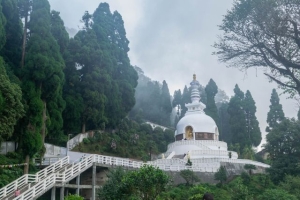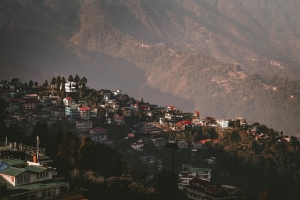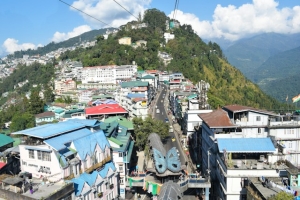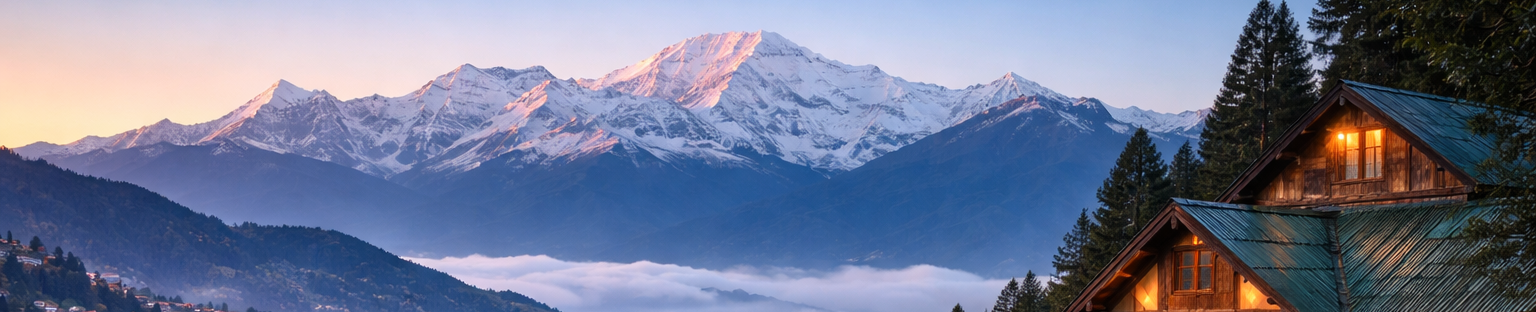
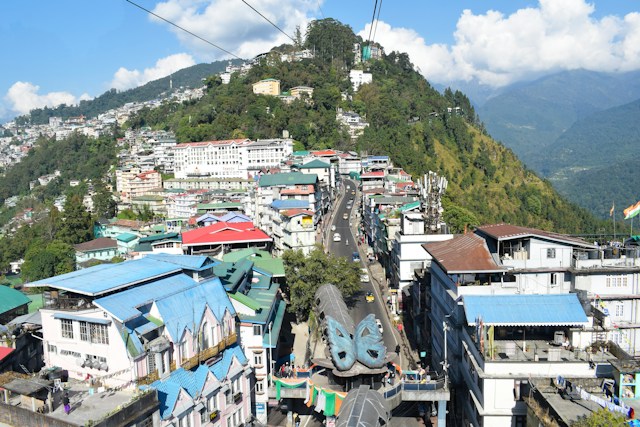
Gangtok, the capital of Sikkim, is one of the most popular Himalayan destinations in Northeast India. Located at around 5,500 feet, the city combines spectacular mountain scenery with Buddhist monasteries, scenic viewpoints, lively markets, local cafés, Tibetan and Nepali cuisine, and easy access to some of Sikkim's most famous attractions.
If you're planning a trip to Gangtok, looking for the best places to visit in Gangtok, or putting together a Gangtok itinerary, this travel guide covers everything you need to know—from sightseeing and transportation to local food, weather, day trips and practical travel tips.
Category | Information |
|---|---|
Location | Sikkim, Northeast India |
Best time to visit | March–May and October–November |
Main attractions | MG Marg, Tsomgo Lake, Nathu La, Rumtek, Enchey Monastery |
Recommended stay | 3–5 days |
Local transport | Taxis, shared taxis and walking |
Scooty rental | Useful for experienced mountain riders |
Popular day trip | Tsomgo Lake + Nathu La |
Must-try food | Momo, thukpa, thenthuk, phagshapa, gundruk |
Gangtok can be visited throughout much of the year, but the experience changes considerably with the seasons.
Spring brings pleasant temperatures and gradually increasing rainfall. This is a popular period for sightseeing, walking around the city and enjoying mountain views.
These are the monsoon months. Gangtok and the surrounding mountains receive frequent rainfall, which can result in cloudy weather, wet roads and occasional travel disruptions.
If you travel during this period, keep your itinerary flexible and allow additional travel time.
The weather generally becomes cooler and drier after the monsoon. This is one of the popular periods for sightseeing and mountain travel.
October can still receive some rainfall, so it is worth checking current weather and road conditions before travelling.
Winter brings colder mornings and evenings, with relatively little rainfall compared with the monsoon season.
If you enjoy cooler weather, winter can be a good time to explore Gangtok, although higher-altitude destinations can be considerably colder.
The following figures are the mean daily minimum and maximum temperatures from the India Meteorological Department's Gangtok climatological data for 1981–2010.
Month | Average Minimum | Average Maximum |
|---|---|---|
January | 4.7°C | 12.3°C |
February | 6.1°C | 13.8°C |
March | 9.2°C | 17.5°C |
April | 11.8°C | 20.5°C |
May | 14.0°C | 21.4°C |
June | 16.4°C | 22.0°C |
July | 17.0°C | 21.6°C |
August | 16.9°C | 22.2°C |
September | 15.9°C | 21.4°C |
October | 12.8°C | 20.4°C |
November | 9.1°C | 17.1°C |
December | 6.2°C | 13.9°C |
March–May: Pleasant spring weather with gradually increasing rainfall.
June–September: Monsoon season, with frequent rain and potentially difficult mountain-road conditions.
October–November: Cooler and generally drier, making this a popular period for sightseeing.
December–February: Cold mornings and evenings with relatively little rainfall.
Weather in the Himalayas can change quickly, so check the latest forecast and road conditions before travelling, especially if you plan to visit higher-altitude destinations.
There are plenty of things to do in Gangtok itself before exploring the surrounding areas.
No Gangtok itinerary is complete without spending some time at MG Marg.
This pedestrian street is the heart of the city and is lined with shops, restaurants, cafés and benches. Vehicles are not allowed on the main promenade, making it particularly pleasant for an evening walk.
Best time to visit: Evening
Tashi View Point is one of the popular places to visit in Gangtok for Himalayan scenery.
Try to visit in the morning when visibility is often better. Mountain clouds can appear quickly later in the day.
Ganesh Tok is a small temple and viewpoint offering panoramic views over Gangtok and the surrounding mountains.
It is easy to combine with Hanuman Tok and other attractions in the northern part of Gangtok.
Located at a higher elevation, Hanuman Tok provides another scenic viewpoint along with a temple dedicated to Lord Hanuman.
It is particularly worthwhile for travellers who enjoy combining cultural sites with mountain views.
Enchey Monastery is one of Gangtok's important Buddhist monasteries.
The monastery can be reached by road, while a stepped pathway from the Chandmari area provides an alternative approach.
If you are interested in Tibetan Buddhism, Himalayan culture and history, the Namgyal Institute of Tibetology is worth adding to your itinerary.
The institute houses an extensive collection of Buddhist manuscripts, statues, Thangkas and other objects related to Buddhist culture.
Do Drul Chorten is located close to the Namgyal Institute of Tibetology, making the two attractions easy to visit together.
It is a good stop for travellers interested in Buddhist architecture and culture.
Banjhakri Falls is another popular attraction that can be included in a Gangtok local sightseeing tour.
It can be covered as part of a local sightseeing circuit.
The Gangtok Ropeway offers an aerial view of the city and surrounding valley.
On a clear day, it can provide a different perspective of Gangtok and the surrounding Himalayan landscape.
For many visitors, Tsomgo Lake and Nathu La are highlights of a Gangtok trip.
Tsomgo Lake, also known as Changu Lake, is around 38 km from Gangtok at an elevation of approximately 12,400 feet. The lake is considered sacred and changes dramatically with the seasons.
Nathu La is located at approximately 4,300 metres and requires special permits for domestic visitors.
A typical excursion looks like:
Gangtok → Tsomgo Lake → Baba Mandir → Nathu La → Gangtok
It's better not to plan this as a scooter trip.
Tsomgo Lake is in a restricted area and visitors require permits. Travel to the area is subject to applicable regulations, permits and operating conditions.
For high-altitude excursions such as Tsomgo Lake and Nathu La, permitted taxis or authorised transport are generally the practical option.
One of the common questions for independent travellers is whether to rent a scooter.
For many visitors, taxis and shared taxis are practical ways to explore Gangtok and nearby attractions.
Reserved or local taxis are available from the market and hotels for several sightseeing locations.
A scooty can be a good option if you are an experienced rider and comfortable with mountain roads.
Be prepared for:
For first-time visitors, a combination of transport options can be more practical:
Gangtok city: Walk + taxi
Local sightseeing: Taxi
Tsomgo/Nathu La: Permitted taxi/SUV
Short independent exploration: Scooty, if you're comfortable riding in the mountains
Gangtok's food culture reflects its Tibetan, Nepali and Sikkimese influences.
If you're visiting for the first time, don't limit yourself to familiar Indian or Chinese dishes.
One of the most popular foods to try in Gangtok.
Try steamed momo, fried momo and different fillings if available.
A warm noodle soup that is particularly enjoyable in Gangtok's cool climate.
Another Himalayan noodle soup made with hand-pulled pieces of dough.
A Tibetan-style fried bread filled with meat.
A traditional Sikkimese pork dish prepared with radish and chilli.
A fermented leafy vegetable preparation popular in Nepali and Himalayan cuisine.
A traditional Himalayan cheese that comes in several varieties and preparations.
When searching for restaurants, look around MG Marg, Tibet Road and the central Gangtok market area.
Some restaurants worth considering include:
Restaurant menus, opening hours and availability can change, so check current information before visiting.
Gangtok works particularly well as a base for exploring nearby destinations.
Recommended time: Full day
This is the classic Gangtok excursion.
Because of permits, altitude and road conditions, arrange this excursion through an authorised local operator or permitted taxi service.
Distance: Approximately 23 km from Gangtok
Rumtek is one of the most important Buddhist monasteries in Sikkim.
The road to Rumtek passes through villages and paddy fields, making the journey scenic as well as cultural.
Recommended time: Full day or overnight
Ravangla is known for mountain views and Buddha Park.
Because it is farther from Gangtok, consider staying overnight if you want a more relaxed experience.
Recommended time: Full day
Namchi offers attractions such as Samdruptse Hill and views of the surrounding Himalayan landscape.
It is better suited to a dedicated day trip rather than being squeezed into a busy Gangtok sightseeing day.
Recommended time: Half day
Saramsa Garden is around 14 km from Gangtok and can be a relatively easy excursion compared with longer mountain journeys.
Start early and visit:
Return to Gangtok in the evening.
If you have five days, avoid filling every hour with sightseeing.
Use the final day for:
A flexible day is especially useful when travelling through the mountains.
Tsomgo Lake and Nathu La are restricted destinations and require appropriate permits.
Permit requirements and access conditions can change, so check the latest rules before travelling.
A destination that looks close on a map can take much longer because of winding roads, traffic and weather.
Build some buffer time into your itinerary.
Rain, fog, road conditions and permit restrictions can affect mountain excursions.
Avoid making your entire trip dependent on a single high-altitude excursion.
Gangtok's weather changes throughout the year, so pack according to the season of your visit.
Useful items can include:
If you're travelling to Tsomgo Lake or Nathu La, bring additional warm clothing because temperatures can be much lower at high altitude.
Tsomgo Lake is around 12,400 feet, significantly higher than Gangtok.
Stay hydrated, avoid overexertion and give yourself time to adjust.
If mountain views are important, start early. Clouds and fog can reduce visibility later in the day.
If you're travelling back to Bagdogra or NJP, don't schedule your mountain excursion immediately before your flight or train.
Allow enough time for unexpected traffic, weather and road delays.
Yes. Gangtok offers a combination of Himalayan scenery, Buddhist monasteries, viewpoints, local food, markets and access to popular destinations in Sikkim.
The city can work well for both short breaks and longer Sikkim itineraries.
3 days is enough for the major Gangtok attractions and a Tsomgo Lake excursion.
4–5 days is more comfortable if you want to include Rumtek, additional day trips and relaxed exploration.
Some of the key attractions include MG Marg, Tashi View Point, Ganesh Tok, Hanuman Tok, Enchey Monastery, Namgyal Institute of Tibetology, Do Drul Chorten, Banjhakri Falls and the Gangtok Ropeway.
Gangtok can be visited throughout the year, but March to May and October to November are popular periods for sightseeing because of generally pleasant conditions.
The monsoon months can bring frequent rain and travel disruptions, while winter brings colder temperatures.
Yes. Local and reserved taxis are commonly used for sightseeing, while shared taxis are useful for transportation around the region.
A scooty can be useful for experienced mountain riders, but it isn't necessary.
Taxis are generally more practical for sightseeing and are preferable for restricted high-altitude destinations.
Don't plan on doing so as an ordinary rental-scooter excursion.
Nathu La is a restricted area requiring special permits and access is subject to applicable rules and conditions.
Try momo, thukpa, thenthuk, sha phalley, phagshapa, gundruk and chhurpi for a taste of Tibetan, Nepali and Sikkimese cuisine.
Tsomgo Lake and Nathu La are among the most popular full-day excursions.
Rumtek Monastery is another convenient option if you want a cultural and scenic day trip.
Yes. Gangtok receives rainfall throughout the year, with the monsoon period from June to September generally being much wetter.
Weather conditions can also change quickly in the mountains, so check the latest forecast before travelling.
Pack according to the season.
Layers, comfortable walking shoes, rain protection and a warm jacket are useful for most trips. If you're visiting higher-altitude destinations such as Tsomgo Lake or Nathu La, bring additional warm clothing.
Gangtok is a destination where the journey is almost as important as the attractions themselves.
Its combination of Himalayan views, Buddhist monasteries, local food, mountain roads and Sikkimese culture makes it an excellent base for exploring Sikkim.
For a first trip, plan at least 3–5 days. Spend time exploring Gangtok itself rather than treating it only as a transit point to Tsomgo Lake.
Whether you visit in spring, summer, monsoon, autumn or winter, keep your itinerary flexible and check the latest weather, road and permit conditions before travelling to higher-altitude destinations.
With a balanced Gangtok itinerary, you can combine the city's cultural attractions with Himalayan scenery, local food and day trips without spending your entire holiday travelling from one attraction to another.